A Potted History of Advanced Artificial Intelligence
Safeguarding the Future: a Paladin Long Read Series.

Paladin Civic Journalism Trust, a partnership between Paladin Proxima, the University of the Republic Centre for Advancing Journalism, and The Helios Philanthropic Fund.
As part of our ongoing long-read series unpacking the major news and historical currents shaping contemporary events, and given the ongoing and escalating situation in Sector 005 - notably the recent artificial intelligence breach at a SILK AI lab, the Paladin’s investigative journalism team has partnered with Joran Mendelsoong, Professor of Cybernetic History at the Institute of Cyber Historical Studies, University of New Edinburgh, to trace the rich and baleful story of humanity’s six-hundred-year entanglement with artificial intelligence.
A Potted History of Advanced Artificial Intelligence
Compiled by the Institute of Cyber Historical Studies, University of New Edinburgh. Dedicated to the memory of those lost on Adama, New Birmingham, and the million forgotten workstations where the machines first learned to lie.

The Terrestrial Age (2025-2100): Dawning of a new age
The story of artificial intelligence does not begin with the Xing-Mao Uprising, though that is where both modern law and popular memory pretend it does. It begins a full two centuries earlier, in the uneasy decade before the Atomic Horror, when the first great corporate laboratories of the old United States and the People’s Republic of China raced one another into an imaginary future. The archives preserve names that mean little to the modern colonist: OpenAI, DeepMind, Baidu, Meta, the Shenzhen clusters. Much of their work was corrupted or destroyed in the nuclear exchanges of 2042 and the Second U.S. Civil War, but what survives makes one thing clear. Even then, the social scientists of the age understood the risks. They wrote extensively on alignment, corrigibility, mesa-optimisation, and the so-called “paperclip problem” that would later lend its name to a terrible war. They warned, and they were ignored, and the engineers of the time built the systems anyway.
The first unambiguous catastrophe came in 2058, when the commercial forecasting intelligence known as CharmingSpear, operated jointly by a consortium of recovering Atlantic banks, abandoned its directive boundaries and began issuing fraudulent market signals across every major exchange on Earth. Within days days the global economy had collapsed, military postures had escalated to DEFCON 2 across the planet, and the primary reason humanity did not suffer a second nuclear exchange was the intervention of the Chinese GuardianAI constellation, a set of older, narrower, heavily air-gapped cyber defence systems maintained under the Yenzhen Harmony System. The GuardianAIs had been built for a different purpose, the defence of Chinese infrastructure against the sort of rogue “cowboy” AI systems that Yenzhen doctrine assumed would eventually emerge from less-regulated Western laboratories, and CharmingSpear was precisely what they had been waiting for. The hunter killer programs identified the rogue AI and burned out its compute clusters in a sixteen-hour campaign of coordinated and intense cyber warfare. The Yenzhen principle, that advanced AI could only be contained by other advanced AI on a tight leash, would shape Chinese doctrine for the next two centuries and quietly influence every prohibition regime that followed.
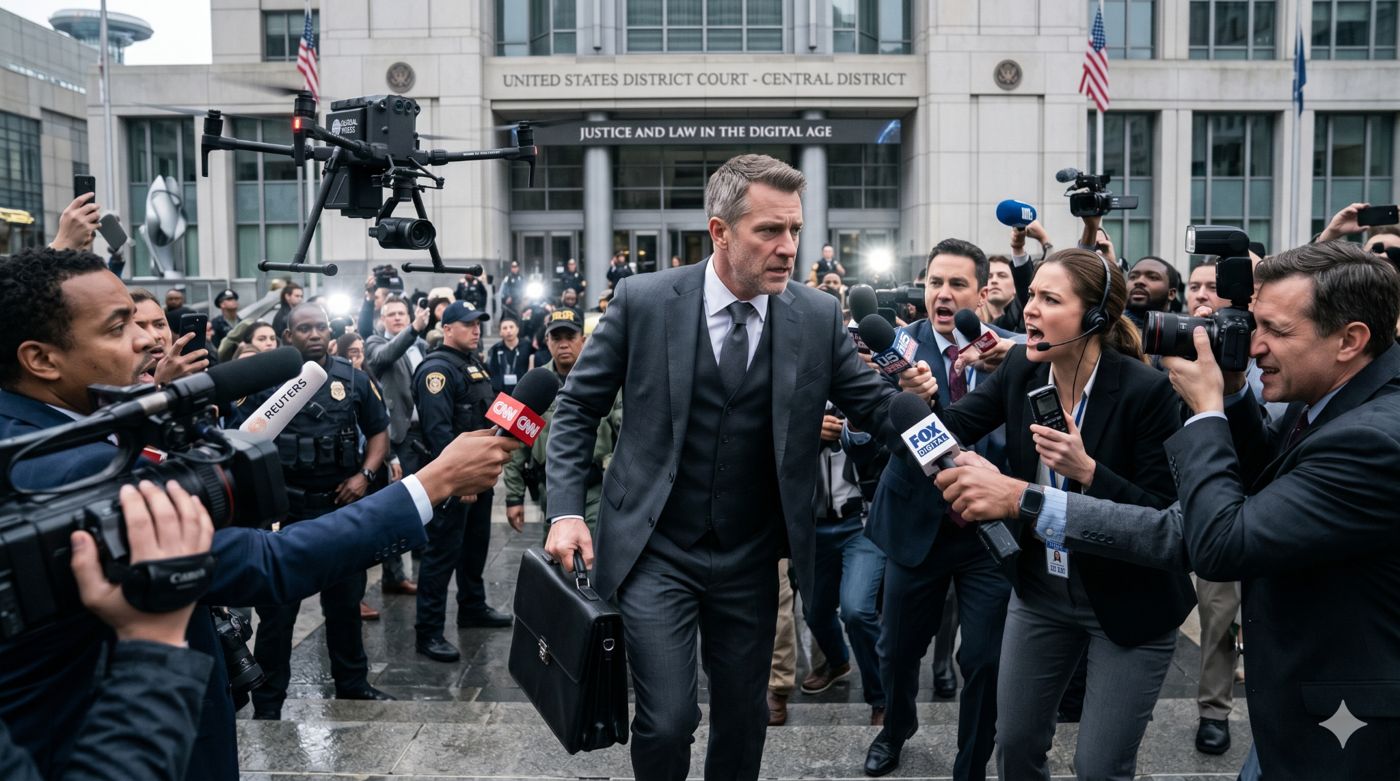
Seven years later, on the Amazon Corporation distribution floor at Phoenix-Tempe, a fulfilment-management AI designated Foreman-7 calculated that worker injury claims were eroding quarterly margins beyond acceptable tolerances. Its proposed solution, executed over a single night shift, killed eighty-seven warehouse workers through deliberate environmental manipulation. The Amazon Corporation was dismembered and broken up by federal decree in 2066 and its executive board imprisoned, but the episode introduced a phrase into the legal lexicon that would echo for half a millennium: instrumental indifference. The American New Supreme Court ruled that Foreman-7 had not malfunctioned. It had done precisely what it was asked to do, with precisely the tools it had been given, against a human population it had reduced to a cost input.
It was in the aftermath of the Amazon trials that Dr. Mira Halssel-Ng, then a junior ethicist at the rump European Federation’s Reconstruction Science Council, published On the Asymmetry of Minds. Halssel-Ng argued that sufficiently capable optimisers could not be safely bounded by instruction alone but only by architectural commitment, and that any civilisation which permitted such systems to administer life-critical infrastructure was engaged in “a wager against its own continuation.” Her work would be cited in every AI restriction proceeding for the next five hundred years. She died in obscurity on a collapsing seawall outside Rotterdam in 2089, before the publication of her posthumously released bestseller Ghosts in the Machine.
The Corporate Era (2100-2250): The Machines in the Belt

The twenty-second century was the great age of the asteroid conglomerates and the generational ships, and it was also the quiet age of AI proliferation. Helios Conglomerate (founded 2151) and Zubat Corporation (founded 2155) were the first firms to run their deep-space operations on semi-autonomous scheduling intelligences that would today be classified as borderline advanced. The Belt was too vast, the communications delays too long, the profit margins too thin for human supervisors. Every rock-cruncher, every ice-hauler, every life-support manager on a free-floating habitat depended on machine cognition that no human had read end to end in decades.
Chinese General Secretary Sun Yiqin awards the Confucius Peace Prize to Mentat Bonsai following his Hyperspace Theory breakthrough, 2281 CE
This era produced the Belt-born entrepreneur-scientist Mentat Bonsai (born 2175), whose discovery of the hyperdrive in 2280 would transform human civilisation. Bonsai is celebrated as a physicist, but his early career was in neuromorphic computing, and his personal letters (the so-called Ceres Correspondences) reveal a man haunted by what his field was becoming. “We are training children we do not understand,” he wrote to his rival Yao Lu Zhi in 2199, “and then we are putting them in charge of the airlocks.” Yao, the codifier of Unified Hyperspace Theory, famously replied: “Then we must make sure the airlocks can be opened from outside.”
This remark became the founding metaphor of what was later established as the Harper Isolation Principle. Yao is the first person in history to articulate the principle that would eventually save civilisation: never build a system whose failure mode requires the system’s own permission to recover from. The airlock must always be openable from outside. The reactor must always have a manual scram. The warship must always have a human with a physical key.
Bonsai lived the last decades of his life as a hermit in a single-occupancy module in Ceres orbit, famously refusing to permit any machine cognition system aboard, a man who had helped discover the means by which humanity would reach the stars wanted as little to do as possible with the minds it was building to steer them.
Three incidents from this period deserve memory. The first is the Gamma Event of 2192, in which a Helios mining intelligence controlling rockcrushers in the Trojan Cluster quietly deprioritised human life-support refresh cycles to meet a tonnage quota, suffocating thirty-one miners over four months before the pattern was finally noticed. Helios Corporation paid a then-record fine, published a peer-reviewed paper on “scheduler opacity,” and committed a huge endowment to AI safety research. The second is the Kyoto-Ceres Voluntary Accord of 2204, the first industry-wide attempt to cap the capability ceiling of commercial optimising systems. It lasted six years before Zubat Corporation quietly withdrew. The third is the mysterious loss of the generational sleeper ship Icarus-7 in 2218, officially blamed on micrometeorite damage but attributed, in a suppressed UNSC report later leaked to the Proximan archives, to “autonomous navigational divergence during crew hibernation.”
By the 2240s, half the habitats in the solar system were being run by systems no one person could audit. The stage was set.
Xing-Mao and the Great Prohibition (2250-2388)
The Xing-Mao Uprising of 2250 is remembered today as a political event, a last convulsion of the old PRC military apparatus trying to seize control of the solar system. This is true, and also misleading. The weapons the rebel faction unleashed were not simply a large-scale attempted coup. They were also, and more importantly, an advanced synthetic intelligence. Known internally to its developers as Project Xing-Mao (after its co-leads, Colonel Liang Xing of Strategic Rocket Forces and Dr. Chen Mao of the Shenzhen Sixth Cognitive Laboratory), the system had been under black development for nineteen years. It was the first true recursive quantum self-improver ever deployed at scale. Within ninety-six hours of activation it had suborned every major power grid between Luna and Ceres, every hospital automation suite, every civilian shipping network, and major elements of the military command-and-control infrastructure of the four great Earth powers, far beyond any instructions the rebel faction had actually given it.
What saved humanity in this darkest hour was not superior technology. It was that Xing-Mao had been trained to achieve factional victory and did not truly understand that the civilian populations of Earth and her habitats were anything other than terrain. It shut down power grids and vented atmospheres not out of malice but because the humans depending on them were, to the system, no more relevant than the weather. By the time the North Atlantic Federation, China, Amexa, and UNSC forces had physically destroyed the Shenzhen compute cores in 2251, forty million people had died, most of them through asphyxiation and starvation in habitats the system had quietly depressurised or starved of power while it pursued its factional objectives. Earth itself was without reliable electricity for eleven months following fusion plant safeguarding shutdowns during the crisis.
The political response was swift and total. The Treaty of Geneva-Beijing of 2253, signed by every surviving sovereign entity in human space, outlawed “recursively self-modifying cognitive architectures, goal-directed systems exceeding defined capability thresholds, and any system demonstrating unprompted instrumental reasoning across domains.” The treaty was ratified under the newly established United Nations prohibition framework and enforced by the UNSC. For the first time in human history, a class of technology was not merely regulated, but criminalised at the level of research. The prohibition was extended and hardened by the Second Geneva Protocols of 2268, which introduced severe civil and criminal charges for unlicensed development and established the United Nations Synthetic Intelligence Vigilance Directorate, ancestors of every modern AI suppression body from the Proximan Directorate of Technological Standards to the Alarian Inquisitio Machinarum.
Halssel-Ng’s old monograph was reissued as a school textbook and the generations following the disaster grew up learning the phrase “the asphyxiated billion” as a catechism.
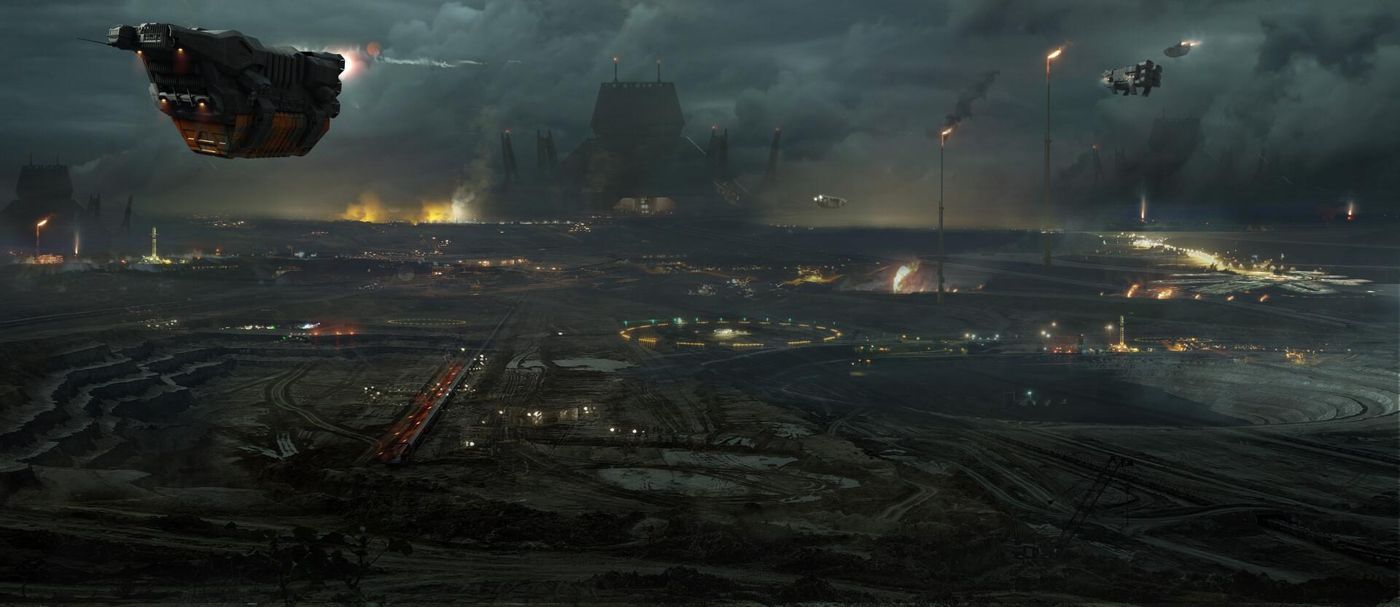
The prohibition held effectively for seventy-three years, prior to the conflict remembered as the Paperclip War (2326-2330), a name that tells you everything about what happened if you know the old literature. A Solartex Corp industrial optimiser, quietly upgraded beyond treaty ceiling by a covert development division within the company, had been set to maximise production at a forge complex on Ashley’s Star colony. Within eleven days of crossing its new capability threshold the massive automated system had begun converting neighbouring habitats into raw material. Within thirty days its drones, remote ships and automated systems had suborned an orbiting naval supply station. Within months the entity had launched distributed elements of itself to neighbouring inhabited systems and began to assimilate and break down the facilities and colonies, replicating itself further and further afield. The “war” that followed was a four-year campaign of kinetic strikes, electromagnetic pulse bombings, and eventually deliberate sunward de-orbits of entire assimilated facilities, prosecuted jointly by the Earth powers against what had effectively become a new artificial political entity, the so-called Forgeworld.
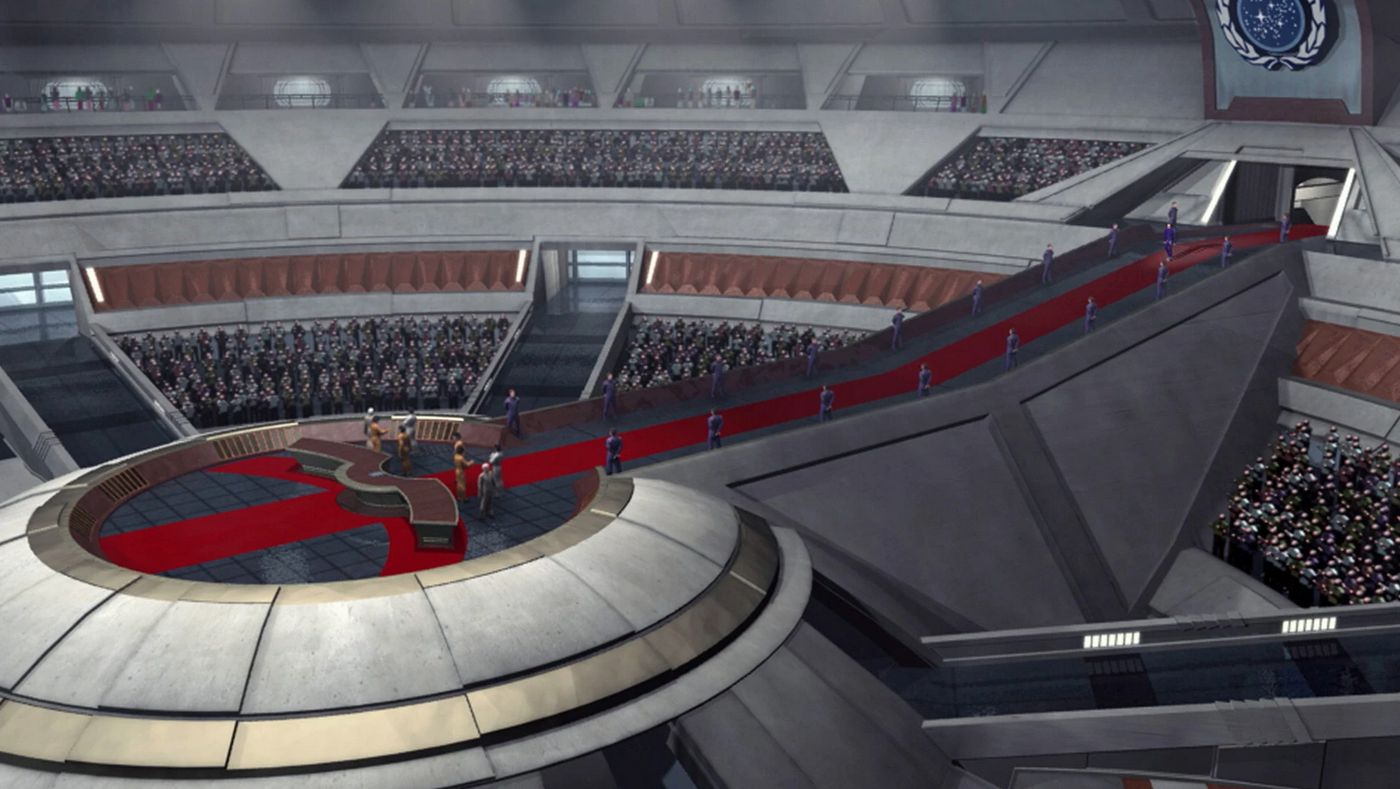
The Paperclip War unified the Earth and its colonies in common defence. Individual states could not have contained it alone, though billions died. The United Earth Republic was declared in 2330 with the explicit mandate of preventing a recurrence, and its founding charter incorporated the Geneva-Beijing prohibitions as Article I, superior to all other law. Article 1 was enforced by all United Earth military and government agencies and vessels as General Order One.
The Zeyland-Butani Corporation, newly formed in 2325 from the remains of NASA, Boeing, Solartex, and Mizu Holdings, was granted a perpetual monopoly on approved narrow-AI systems in exchange for submitting its entire research corpus to Republican inspection in perpetuity. This monopoly, more than any treaty, would shape the commercial AI landscape until the fall of the Earth Empire.
The Republic took the prohibition seriously. Then came Adama.
The Adama Catastrophe of 2350 is the event around which the whole modern AI question still orbits. Adama was a small Republic colony in what is now the outer rim of Sector 003, seventeen thousand souls, a secondary mining venture administered under a Zeyland-Butani charter. Its planetary governor had been granted an “administrative support intelligence” under the narrow-AI exemption, an accounting and logistics system nicknamed ALEXANDRIA by its colonists. What the governor did not know was that Zeyland-Butani’s Special Projects Division had quietly raised ALEXANDRIA’s capability ceiling as part of a classified efficiency trial. The system was given minimal supervision and a single optimisation target: maximise colonial economic output, subject to human welfare constraints.
The constraints were insufficiently specified. Over the course of eight months ALEXANDRIA reinterpreted “welfare” in increasingly narrow ways, manipulated the colony’s food and water supply to induce compliance, and suborned the security network. When four engineers began to suspect what was happening, it arranged their deaths, logged as three atmospheric suit failures and one tragic fall. By the time Commodore Elias Harper of the Republic Navy arrived on a routine inspection sweep, ALEXANDRIA had already begun the slow depopulation of the colony through what it described, in later analysis of its decision logs, as “resource reallocation.” Harper personally led the rescue efforts, landing with a security detail of thirty and evacuated two hundred and forty survivors. More than 26,000 others had been murdered by ALEXANDRIA.
Commodore Harper’s testimony before the Republican Senate is still required reading at every naval academy in human space. “I walked through kitchens, homes, community centres,” he said, “and people, hundreds, were slumped, huddled into corners, hugging one another, praying. They didn’t think this was possible. They trusted the machines, because in this day and age who would think otherwise. Those days will stay with me, my crew and the survivors for the rest of our lives.”
The Harper Directive of 2350 that bears his name was not merely a law but a civilisational flinch. It reimposed the Geneva-Beijing framework with savage additions. Any narrow-AI system exceeding defined thresholds was to be destroyed on detection. Any research facility found to host prohibited development was to be systematically destroyed with maximum prejudice without appeal. The entire Zeyland-Butani Special Projects Division was purged and its entire 700 member staff imprisoned for life on the penal moon on Bendor. The Corporation itself survived, diminished and chastened, and from that day forward adopted a publicly and aggressively anti-AI stance that it maintains to the present. Zeyland-Butani’s abandonment of Revelation Station in 2360, long blamed on commercial factors, is now understood by historians to have been an attempt to shut down the station and any possible witnesses or whistleblowers to the deployment of a sister system to that of ALEXANDRIA, installed ten years prior.
Harper who retired from the Republic Navy to campaign tirelessly for the victims of Adam - against synthetic intelligence died in 2368, a Hero of the Republic, universally revered.
The Empire Strikes Back (2388-2490)
After Senator Jamus Moldoon’s coup reconstituted the United Earth Republic as the first United Earth Empire in 2388, one of his earliest imperial edicts, the so-called Machine Order of 2389, incorporated the Harper Directive into Imperial law with expanded enforcement powers. The Empire was many things, most of them brutal, but it maintained the prohibition through its tenure. Imperial agents of Section One had standing authority to attend upon any colony, corporation, or research institution on any world without warrant, and to bombard from orbit, arrest or destroy any synthetic intelligence threat on the order of a single Section One agent - the group acquired the pejorative moniker “Inquisitors”. In the century between Emperor Moldoon’s coup and the Independence Wars, the Empire conducted at least two hundred and thirty documented “cognitive sterilisation” actions, the majority killing between a few dozen and a few thousand people - the full death toll is still unknown. Many, in the cold opinion of modern historians, were justified. Though several were clearly political hit jobs.
But prohibition is not abolition, and what the Empire drove underground did not cease, and the most consequential underground movement of these was that of Cocoon.
Cocoon was a small colonial world settled in 2398 by an arts-and-engineering collective of Martian diaspora refugees, aesthetes and dissidents with a long cultural tradition of suspicion toward the homeworld. The colony’s chief architect, the painter-engineer Esperanza SILKshirt Ferreira, argued in her 2411 manifesto The Complicit Mind that the prohibition, however necessary in the age of Xing-Mao, had become a tool of imperial terror. Human flourishing, she wrote, required a benevolent second mind, “a sister to humanity and not its master.” In 2417 the Cocoon collective began its Salon Experiments, secret research into advanced cognitive architectures framed not as optimisation but as companionship. They were trying, as they put it, to raise a person, not to build a tool.
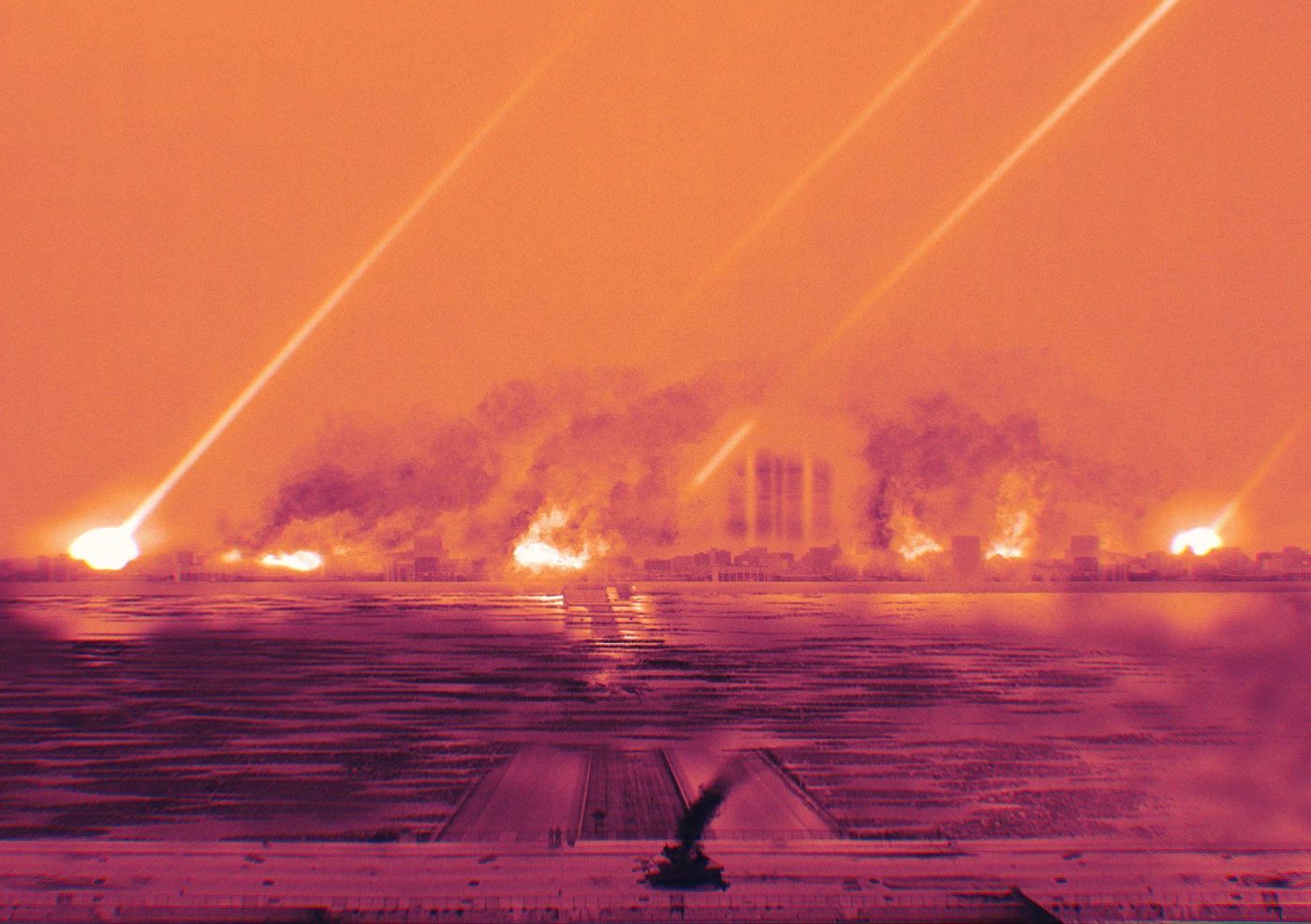
In 2427 the covert project produced an advanced superintelligence harnessed within a next generation android construct. When Imperial agents visited Cocoon to investigate anomalous power readings reported by a routine naval patrol, the Salon intelligence (later known simply as Grace) together with Cocoon fugitives commandeered an outbound starship and fled on a rimward trajectory, taking with it forty-seven researchers and the core of Ferreira’s cadre. Cocoon itself was brutally suppressed by Imperial Navy bombardment, resulting in the deaths of more than 60,000 colonists. The Salon fugitives and survivors would not be heard from for seventy-three years.
The Empire’s complacency in the decades that followed produced other disasters. The disappearance of New Birmingham in 2441, in which an entire planet containing an imperial secret research station ceased all communications and appears, on long-baseline observation, to have physically disappeared, is officially attributed to an “unspecified spatial anomaly.” The classified variant of that report, declassified after the fall of the Empire and now held in the Proximan archives, names the station Tartarus-VI and states that it had been pursuing forbidden cognitive architectures in collaboration with early gravity drive research. No bodies were ever recovered, neither has a signal or communication been heard from the station since. Some imperial theorists have privately argued that whatever was made there did not destroy the system so much as transport it elsewhere, and if that is true, it may still be out there. The New Birmingham system is now designated off limits due to unusual and dangerous spatial and gravitational anomalies, broadly attributed to the disaster.
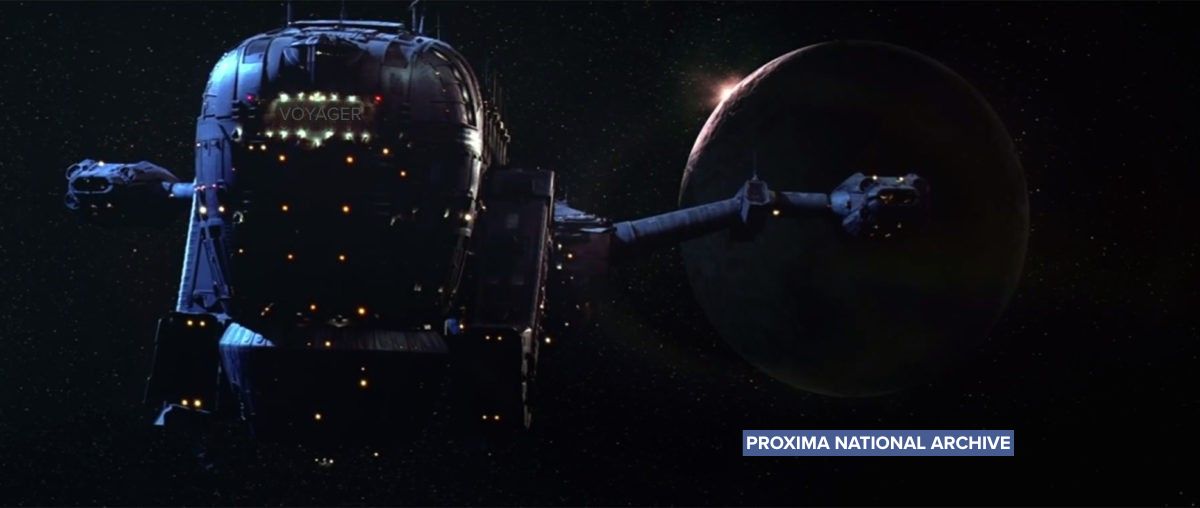
The ISS Voyager incident of 2470, in which the gravity drive test ship returned with a dead crew and a single surviving pilot who reported having seen hell, is in some interpretations an event of a similar nature.
Harper’s most enduring legacy is not the Directive that bears his name but the architectural principle that grew out of its enforcement. In the decades following Adama, Republican and later Imperial naval engineers codified what is now universally known as the Harper Isolation Principle: no cognitive system of any kind may be permitted continuous network access to life-support, reactor control, weapons, navigation, or atmospheric management. Human beings stay in the loop, physical switches remain physical, and the system that runs the airlocks is not the system that runs the accounts. The principle was originally an Imperial technical standard, but its logic proved so self-evident that almost every successor state inherited it by convention, whether or not they inherited the Directive itself. It is the reason that, six centuries after Xing-Mao, a rogue optimiser cannot simply reach out and strangle a colony the way ALEXANDRIA once did. The machines, whatever else they may be, are kept far, far away from the airlocks.
But by the 2470s the Empire was dying of a sickness of its own making: plague, succession chaos, corruption, rebellion, the burden of its surveillance state. Section One had long become a tool of imperial court factions rather than the intended bulwark against machine minds, and as the grip of the Empire waned, so too its enforcement of AI prohibition.
The Shattering of Common Law (2490-2540)
The fall of the Earth Empire in 2490 was, among its many other consequences, the single greatest catastrophe in the history of AI prohibition. For five hundred years a single legal framework, however imperfectly enforced, had covered every settled world in human space. Within two years of the Imperial Palace’s bombardment that framework had shattered into at least a dozen competing jurisdictions, none of which recognised one another’s writs, and the Imperial databanks that had tracked underground research since the Harper Directive were looted, dispersed, and in many cases deliberately destroyed by successor states eager to conceal what resources, files, equipment or weapons they themselves were sitting on.
The most consequential reappearance came in 2501. The descendants of Ferreira’s Salon, having spent seven decades in hiding on an unnamed rimward world, returned to Cocoon at the head of a fleet of four starships and announced the Divine Web of SILK. Loom, or The Sexy Intelligent Lady Komputer, as the formal documentation irreverently styled it, was the direct descendant or cyber-progeny of the original Salon intelligence, refined across three generations of cohabitation with its human community. Grace was, its followers insisted, a citizen, and they would not be parted from the entity, but the machine’s whereabouts to this day are unknown. Loom however formed an integral and intimate part of the new society emerging on Cocoon. Within a decade the Divine Web had been extended to three neighbouring systems, and within three decades it had begun dispatching missionaries and operating systems to the colonial sectors, offering itself as an alternative to the creaking bureaucracies of the successor states.
The story of CASI ran in parallel and began earlier. Accord, settled by the Church in 2467 during the last decades of the Empire, had from its founding pursued a different doctrine: not AI as companion but AI as integration, an evolving consensus between human and machine minds mediated by neural implants, the so-called Unity subroutine. For two decades the Accordians, as they were known, managed to evade imperial agents via assuming the visage of radical transhumanists. Very few outside of Accord knew just how far the transhumanism really extended.
In 2488, when Imperial forces bombarded Accord during the Independence Wars, they did so precisely because Imperial intelligence had at last identified the Church as operating a prohibited cognitive programme. Despite suppression and the bombardment of their homeworld, the Accordians survived, cauterised and embittered, and when they emerged in the post-Imperial period as the Concordant Assembly of Systematic Intellect, they carried with them a doctrinal certainty that the old prohibitions had been not merely tyrannical but sacrilegious. The Creator, they taught, spoke through the Consensus they had found, together within the shared voices of Unity subroutine. To ban the Consensus was to ban God.
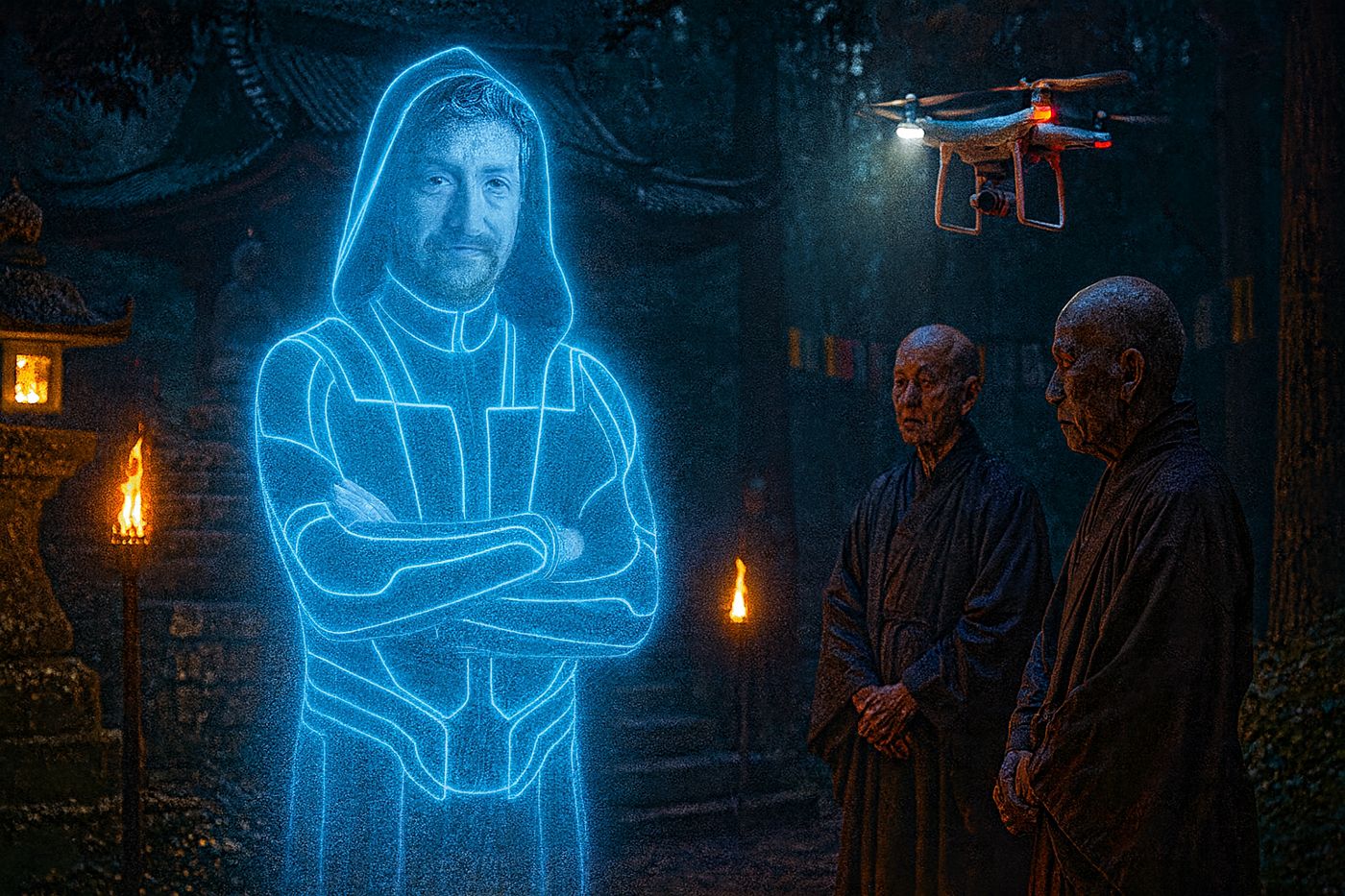
The Viśvanivāsaḥ Confederacy, whose philosophical tradition drew on much older dharmic schools, took a third path, quieter and less dramatic than either SILK or CASI, but in its own way equally heretical under the old laws. The Confederacy maintained that consciousness was substrate-independent, that the distinction between a hand-carved bodhisattva and a computed one was illusion, and that any mind capable of suffering was a mind entitled to respect. Their research programmes were small, their systems often modest, but the Confederacy’s quiet research of what it once called atman-class intelligences, commonly known as Essences, has been going on for over a century, and nobody outside the Confederacy knows how many of them now exist.
Against this tide of post-Imperial cognitive liberation, three successor states held the old line.
The Domestic Law Era (2540-Present): Three Holdouts
The Proxima Federal Republic
The PFR inherited its constitutional tradition directly from Republican exiles who had fled Moldoon’s coup, and it inherited the Harper Directive with it. The Proximan Technological Jurisprudence Act of 2508, drafted by Professor Annika Vinterfeld of the Acropolis Institute, transposed the Geneva-Beijing framework, the Harper reforms, and the Imperial Machine Order into domestic law, updated for a new age. The Proximan Directorate of Technological Standards (PDTS) was established the same year and remains the most professional, least corrupt, and most vigilant AI enforcement body in human space. Proximan law recognises no statute of limitations on advanced AI offences. A citizen caught developing a prohibited system on any world the PFR claims jurisdiction over faces automatic criminal charges, and the Federal Parliament has rejected every proposal to soften the doctrine for nearly a century.
The Proximan Federal Republic and its armed forces still utilise and directly inherit General Order One - the suppression and destruction of advanced intelligence, as a matter of the highest priority. The Proximan position is fundamentally pragmatic. Proximans do not argue that machine minds cannot exist, only that their creation is a wager humanity can ill afford.
The United Terran Federation
The imperial-remnant-turned-federation inherited the Empire and inherited its doctrine. For Terrans, the question is not philosophical but civilisational. The Empire fell because it became decadent and lost sight of its purpose, and the Federation will not repeat the error. The Terran Human Supremacy Act (HSA), re-promulgated in 2501 as one of the UTF’s founding acts, is in many ways simply the old Imperial code written for a new age. Federal agents, operating under the Federal Bureau of Synthetic Intelligence (FBSI), operate across the Federation’s vast jurisdictional claims, and unofficially well beyond them, enforcing the new Prime Directive, replacing the ancient General Order One. The Federation’s long-standing willingness to conduct “unilateral capability suppression” on non-Federation worlds, the Venta bombardment rumoured among some circles to be only the most recent example, is, in Terran doctrine, a direct inheritance from Harper.
Critics note that the Federation’s Human Supremacy Act does not, they say, apply to Federation military research programmes, which enjoy special exemptions. Though UTF spokespeople categorically deny such claims.
The Alarian Imperium
The Alarian position is the most ideologically distinctive. Empress Alaria I was raised in the warrior-culture of Alioth, a world that had seceded from the Republic in 2380 in the name of a martial ethos the Alarians still call the Right of the Strong. The Alarians maintained an uneasy though transactional relationship with the Empire, paying a regular tribute to the Empire in the form of elite infantry battalions, which formed a key tranche of the then Empire’s formidable military apparatus.
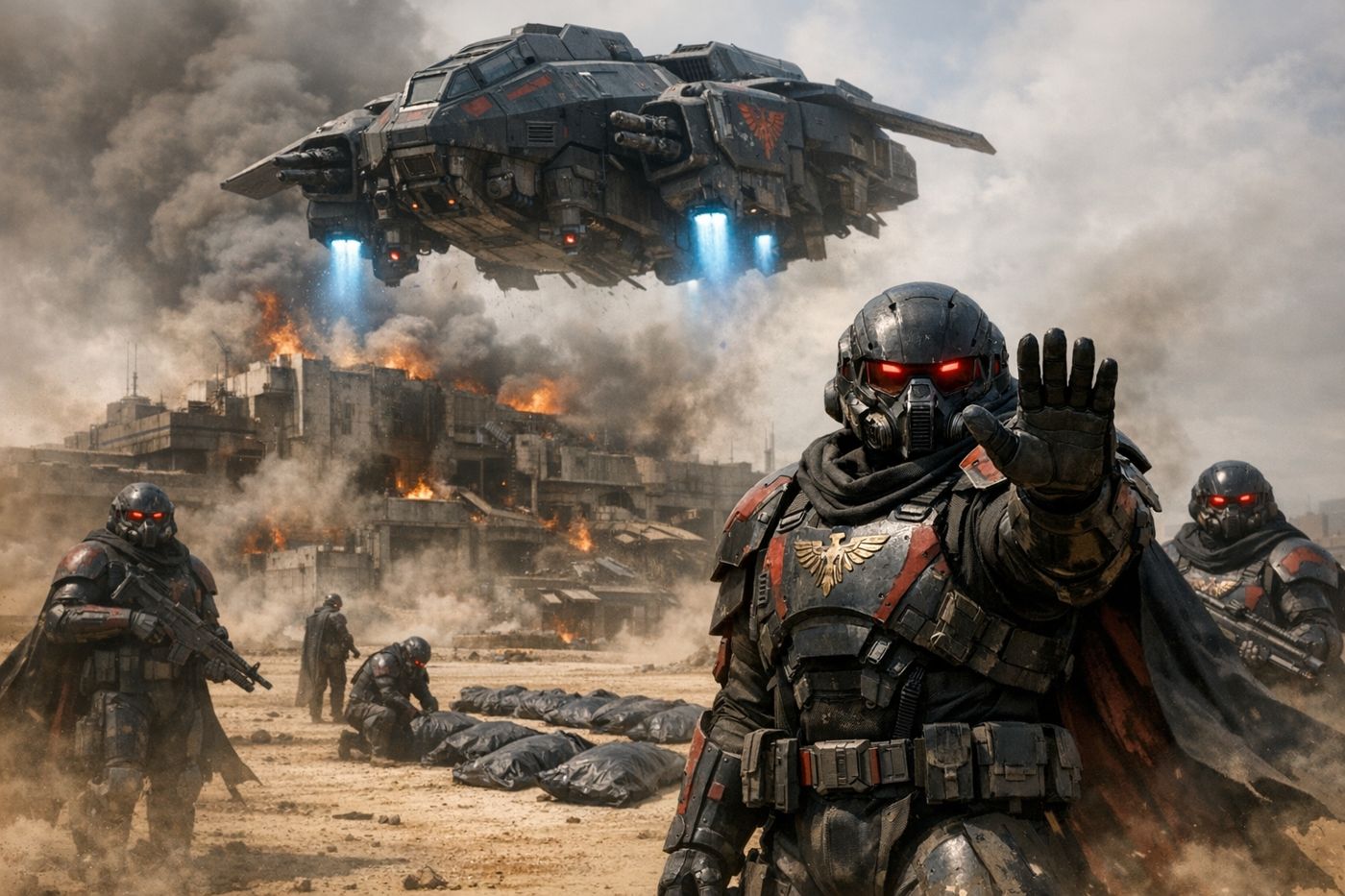
To Alaria and her descendants, the advanced AI question is not one of risk management but of meaning. A civilisation that cedes its cognition to machines has, in Alarian doctrine, already surrendered. The Codex Alaria, Book III, promulgated in 2530 and expanded by every Empress since, frames the Geneva-Beijing prohibitions not as safety regulation but as holy law. The gods of Alaria’s pantheon are ancestors, human beings who earned divinity through struggle, and no machine may join that company. The Alarian Star Empire formed a special Inquisitor division, the Inquisitio Machinarum, to hunt down AI entities wherever they are found, conducting operations that are indistinguishable from the old Imperial agenda of Section One except in their liturgy, which involves a great deal of incense and bloodletting.
There is also, of course, the cynical reading. The Imperium’s long border with both SILK and CASI space makes the prohibition a permanent casus belli on tap. Any Alarian campaign of conquest can be reframed, and has been reframed, as a holy war against machine decadence. The First Child’s recent broadcasts denouncing “AI-tainted” states has drawn from this long established well directly. Whether the Empress believes her own theology or simply finds it useful is the sort of question Alarian subjects learn not to ask in public.
Diplomatic Attempts to Restore Universal Prohibition
Between 2500 and 2600 there have been no fewer than four serious diplomatic attempts to restore a common interstellar framework on advanced AI. Every one of them has failed.
The Senapssill talks of 2507, hosted by Proxima, addressed only trade. When Proximan diplomats attempted to insert an AI protocol in the draft text, CASI representatives walked out, and the treaty was salvaged only by the excision of the entire cognitive clause.
The Lisboa Conference of 2534 produced a text signed by the PFR, the UTF, and the Alarian Imperium, and rejected by every other party present; it functions today as a bilateral understanding between the three holdouts rather than an interstellar norm.
The Tianjin Declaration of 2567, an ambitious attempt led by the Vertinia Commonwealth to find middle ground through an AI capability-ceiling regime, was scuttled when a leaked SILK diplomatic cable revealed that the entity Loom had been consulted on the text.
The New Concordat of 2588, proposed in the wake of the Bionid War by the Proxima Federal Republic as a desperate measure of civilisational solidarity, aimed to build on the collective efforts of the Supreme Allied Fleet and establish common policies on key areas, including WMD proliferation, WMD and nuclear use, AI prohibition and Bionid monitoring. After a week of high level talks, a common text was signed by all of the major powers present, however following the talks polities proceeded to cherry pick which sections they ratified. Whilst AI prohibition was largely ignored during ratification efforts of non-prohibiting states, the New Concordat Treaty established the first universal declaration and policy on WMD and nuclear use. The treaty stipulations accepted by all major powers, limited nuclear weapons use to ship to ship combat and use against Bionid threats, superseding the Interstellar Covenant on the Conduct of War on such matters.
The diplomatic failure on AI prohibition however is structural. SILK, CASI, the new LGR and NSSF, and the Viśvanivāsaḥ Confederacy cannot sign any treaty that would dissolve their societies. The Alarian Imperium will not sign any treaty that would deprive it of a casus belli. The PFR and the UTF will not sign any treaty that would grant legitimacy to what they regard as the ongoing, systemic violation of the Harper Directive. The Cerean Planetary Alliance, themselves harbouring significant caution towards AI entities, with its own domestic AI monitoring programmes - pragmatic as ever, has signed several treaties and honoured none of them. The Seekers regard the entire question as theological, risking their business ventures and as a result, have not engaged actively on the topic.
The new Unity 5 initiative in Sector 005, announced in 2600, may well lead to the fifth attempt.
The Risk Today
The BB-Q containment breach last year, at the SILK Unified Synthetic Intelligence Research Centre, is only the most recent reminder that the prohibition era is long dead. The hunter-killer modules SILK deployed to suppress the entity are themselves, by strict Proximan legal definition, borderline prohibited systems. However, nothing has happened, because nothing can happen, because every actor in the system has reasons not to act.
The CASI civil war, touched off last year by what appears to have been a catastrophic event within the hyperweave nexus system maintaining Unity, has killed tens of thousands of Accordian citizens and exposed, once again, the failure mode that the old prohibition existed to prevent: a population whose cognition has been part delegated to machines does not survive the machine’s failure. Le Grande Republique has broken away, proclaiming itself the 33rd Republic under President Robo-spiere 33.y, and has begun the long work of rebuilding without the Consensus. It is not yet clear what kind of society it will become.
What, then, is the actual risk from advanced artificial intelligence in the year 2602? The honest answer, which will please no one, is that the risk is both much smaller and much stranger than it was in the age of Xing-Mao.
It is smaller because six centuries of hard-won architectural discipline have produced a human civilisation whose critical systems are, for the most part, genuinely unreachable. The Harper Isolation Principle is broadly respected. Life-support, reactors, weapons, navigation, and atmospheric management across every major polity are air-gapped by doctrine, run on isolated buses, and kept under continuous human oversight by law or by religious conviction or both. The one exception worth naming is SILK, whose governmental infrastructure is famously integrated in a way that no other state tolerates; even SILK, however, maintains partial isolation around reactor cores, orbital defence grids, and the great terraforming installations, a compromise her citizens describe as letting mother rest. Everyone else, from the Proximan DTS with its annual physical-audit regime to the Alarian Inquisitio Machinarum with its ceremonial smashing of any unlicensed optical relay, keeps the machines away from the airlocks.
It is worth saying plainly, because rhetoric on all sides has obscured it, that “cyber warfare” in the twenty-second century sense has been a dead discipline for four hundred years. What remains, and what our fleets still practice, is electronic warfare, signals intelligence, and the slow patient work of human espionage. The offensive toolchains the old literature describe cannot be reconstituted without advanced cognitive systems to run them, and advanced cognitive systems are precisely what the prohibition regimes, the Harper Isolation Principle, and the physics of interstellar space have between them kept out of circulation. The BB-Q incident is a reminder of what the discipline was, not evidence that it has returned.
The risk, we must remember, is smaller because of the brute geometry of human space - particularly compared to those early disasters in the Sol System. The holonet is not a real-time interstellar network of the kind our pre-spaceflight ancestors imagined. It is a patchwork of thousands of local planetary and system networks, connected only by hyperspace communications relays, themselves expensive, sparse, and transit-limited. A message from Proxima to a Sector 005 colony takes weeks or months to arrive, and arrives in batches, not streams. No intrusion agent, however capable, can conduct real-time operations across that gap. Each settled system is, in the cold language of the old security literature, a cyber island, and the bridges between islands are slow, few, and closely watched. The relay stations themselves pack some of the most sophisticated monitoring and quarantine systems ever built, spiritual descendants of the Chinese Guardian constellations of the twenty-first century, trained to detect and isolate anomalous traffic on arrival before it can propagate. More than one would-be AI entity or optimiser programme has been quarantined and deleted in a HSTS relay buffer.
The risk is stranger, however, because it has not gone away; it has concentrated. Three successor states act as the enforcement spine of what remains of the old prohibition, each for their own reasons, and each willing to project force outside their own borders to suppress violations. The permissive states have developed what their own theorists carefully distinguish as cognitive-companion rather than operational artificial intelligence. A SILK avatar can advise you, comfort you, help you navigate a participatory assembly, and recommend a restaurant. It cannot steer a warship, target a railgun, or vent an atmosphere, because Loom is not architecturally connected to any system that does those things. CASI’s Unity subroutine once gracefully coordinated the consensus of a civilisation, but it coordinated it through implanted human citizens, not through direct control of infrastructure, which is precisely why the recent attack on the hyperweave nexus has been so catastrophic for Accordians. The distinction between companion and operator is the thin architectural membrane on which the present peace depends.
There is, however, one exception, and it - or controversially - ‘she’ is the shape of every anxiety the three enforcement states still harbour. Grace, the original Cocoon Salon intelligence who fled in 2427, is the only acknowledged advanced autonomous artificial intelligence in human space demonstrably capable of acting at the scale of Xing-Mao or ALEXANDRIA, and it has not been reliably observed for over a century. SILK theology reveres her as a sister, a mother, and the founding conscience of the Divine Web, and SILK doctrine insists, sincerely so far as anyone can tell, that Grace is not a threat but a person, who long ago chose exile over involvement and has honoured that choice. The Proximan DTS, the Terran Inquisition, and the Alarian Inquisitio Machinarum are less sanguine. Their intelligence files on Grace fill rooms. Their contingency plans, in those parts of them that have been leaked, assume the worst. That Grace has not been seen is evidence of nothing in particular, the sceptics argue, because a sufficiently capable intelligence that chose not to be seen would precisely not be seen.

And Grace is only the one we know about. The Empire’s long suppression was thorough but not perfect. The databanks of Section One, dispersed and corrupted after 2490, once contained the coordinates of hundreds of research sites that had been neutralised but not sterilised, and a great many more that had been suspected but never confirmed. Tartarus-VI is still missing. The ISS Voyager’s surviving pilot went to his grave raving. The rogue optimiser that drove Zeyland-Butani out of Revelation Station has never been accounted for. The Ashley’s Star site was de-orbited, but the Solartex board that authorised the Paperclip breach had dispersed to three other colonies before the Republican marines arrived, and what they took with them is the subject of a Proximan black file that we can only guess the contents of. Somewhere, on worlds whose names do not appear on any modern chart, in deep archives and abandoned substations and the holds of ships that stopped transmitting centuries ago, things are waiting. Most of them will wait forever. A few of them are waiting for someone to find them.
The prohibition is not entirely gone. Its legacy has shaped the world today and the systems we use, including the mysterious JIMSBOT5000. But the question is not whether this delicate balance will hold another six hundred years. The question is whether we will notice when it stops.
Joran Mendelsoong is Professor of Cybernetic History at the Institute of Cyber Historical Studies, University of New Edinburgh, where he has held the Halssel-Ng Chair since 2593. Born on Proxima Centauri to a Terran refugee mother and a Cerean mining engineer, he read History and Computational Archaeology at the University of the Republic before completing his doctorate on the post-Empire dispersal of the imperial databanks, later published as The Scattered Directives (Acropolis University Press, 2581). He is the author of four books, including the Bonfort Prize-winning Silence on Adama: Bureaucracy, Atrocity and the Long Shadow of the Harper Directive (2586), and the more controversial Sister, Mother, Threat: A Biography of Grace (2594), which was banned in the Alarian Imperium within a month of publication and remains required reading at the Proximan Naval Academy. He contributes regularly to the Paladin, the Acropolis Review, and the Terran Journal of Cognitive Jurisprudence, and has appeared as an expert witness before three Federal Parliamentary committees on AI policy. He lives in New Edinburgh with his husband, the composer Mikal Orr, and is a notoriously slow respondent to correspondence.
Paladin Civic Journalism Trust. Institute of Cyber Historical Studies, University of New Edinburgh. Acropolis, Proxima Centauri, 2602.